Dene Stick Pull
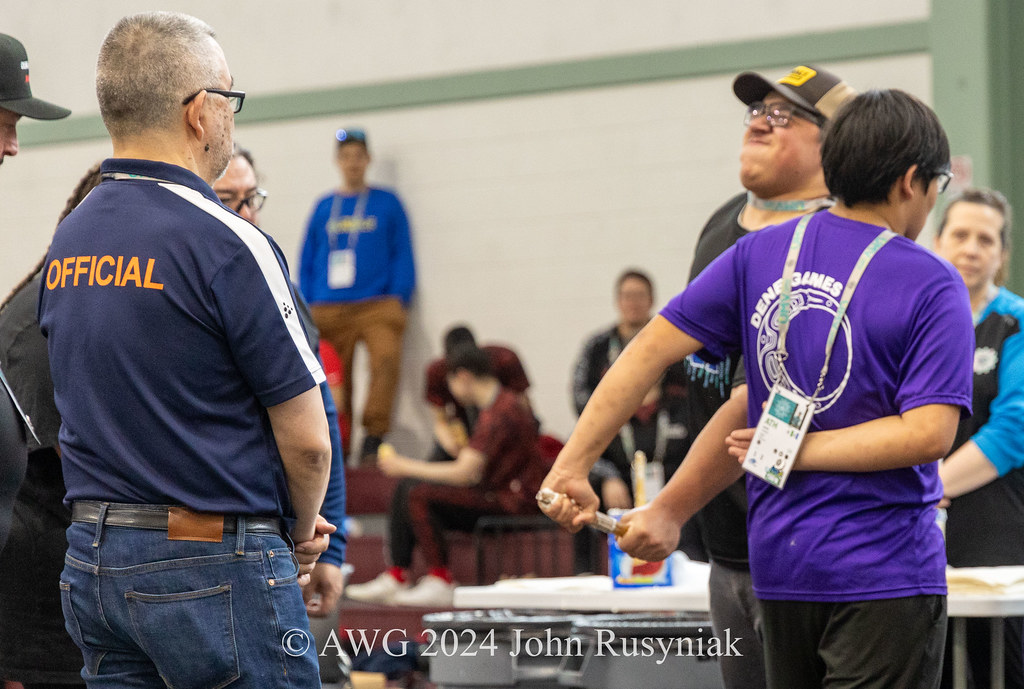
Dene (or Indian) stick pull is a traditional Dene sport. The discipline consists of two participants holding onto a stick, fully covered in grease, at the center and then attempting to pull the stick from the opponent. Like many other Arctic and Dene sports, it has its origins in ice fishing. The greasy stick tests the participant 's grip and is like holding a fish by its tail. While not ice fishing, Dene fisherman would practice stick pull to practice their grip and become better at holding on to caught fish. It would also let them practice catching fish bare handed. Bear grease was traditionally used for stick pull, but in today's high-level competitions normal Crisco is used.
Competing: Open Male, Open Female, U17 Male and U17 Female
Each competitor has three (3) attempts.
Snow Snake
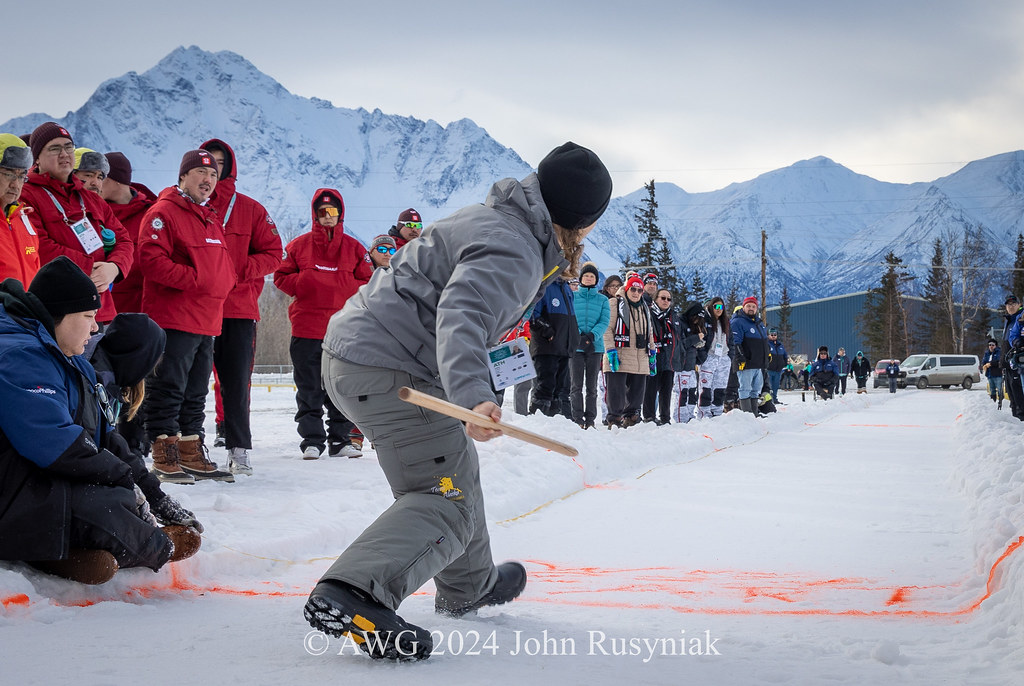
The snow snake (occasionally spelled as one word, "snowsnake") discipline originates from the Iroquois and Dene. In this discipline, the participants throw a carved stick along a set route.
Like many other Arctic and Dene sports, the snow snake discipline has its origins in hunting. Throwing the snow snake replicates hunting caribous, seal and ptarmigan, as the hunters had to sneak up on their prey and throw their spear or snow snake from great distances with great accuracy.
The longest recorded distance set at a snow snake game was set at the Games. The current record stands at 159.89 meters or 524 feet 7 inches.
Competing: Open Male, Open Female, U18 Male and U18 Female
Each competitor has three (3) attempts.
Hand games
In the hand games two teams kneel on the floor, facing each other. The teams take turns being the active team, with the active team having to hide tokens in their hands, while their hands are hidden under a blanket. Traditionally drummers and singers play music while the hiding of the tokens are happening. After the tokens have been hidden, the opposing team must guess in which hands the tokens are hidden. Any number of people can play the Hand Game, but each team (the "hiding" team and the "guessing" team) must have one pointer on each side. The Hand Game is played with two pairs of 'bones', each pair consisting of one plain and one striped bone. Ten sticks are used as counters with some variations using additional count sticks such as extra stick or "kick Stick" won by the starting team. The "raw" or "uncooked" counting sticks will be divided evenly between both opposing teams.
This team sport, also known as Stick Gambling, is one of the most widespread games played among Dene nations. Unlike many other Dene games that tested physical ability, hand games were guessing games played for fun or for trade purposes. Hunting parties bet weapons, tools, and blankets on the outcome of the game.
Competing: Open Male, Open Female, U17 Male and U17 Female
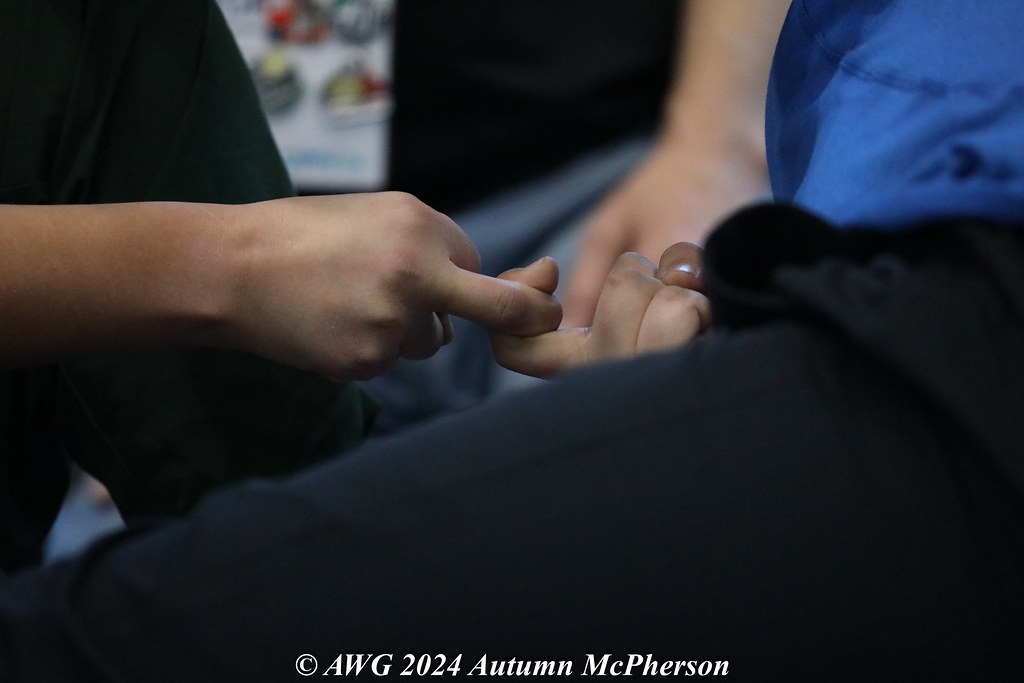
Finger Pull
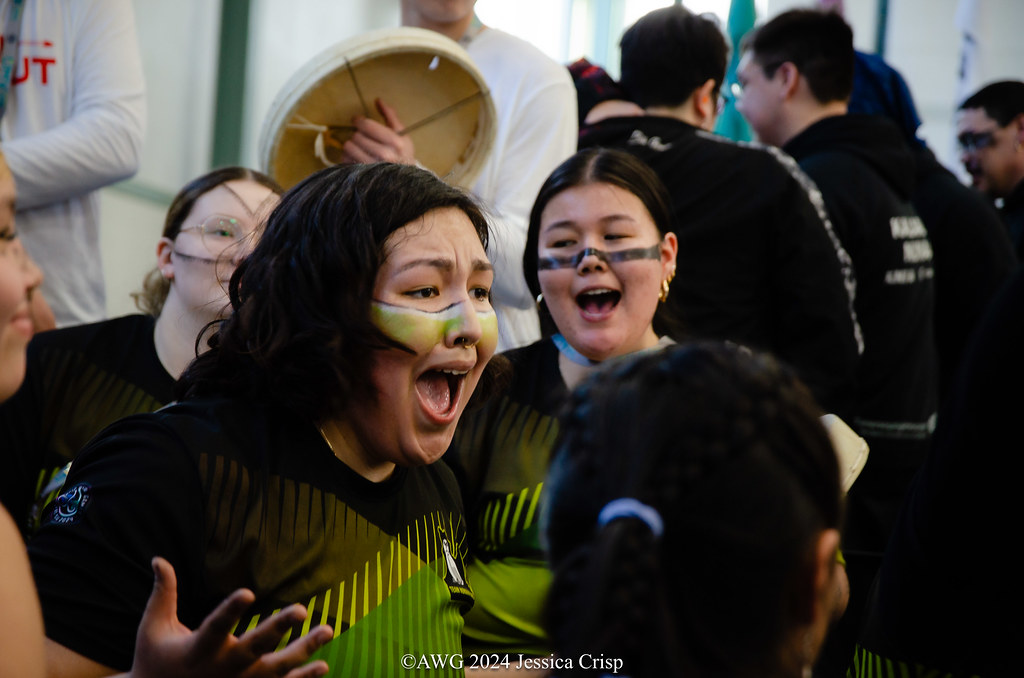
Two players sit facing each other, one player with the right leg bent and the second player with both feet braced against the shin of the first player’s bent leg.
The competition consists of a best of three “pulls”. The first “pull” as described above, the second “pull” with positions reversed. If a third pull is necessary, the positions of the players are determined by a flip of a coin. The winner of the first pull calls the coin toss.
It was played to strengthen the fingers to prepare the dene people for fishing season. This is a game that comes from the people of Alaska.
Competing: Open Male, Open Female, U17 Male and U17 Female
Each competitor has three (3) attempts.
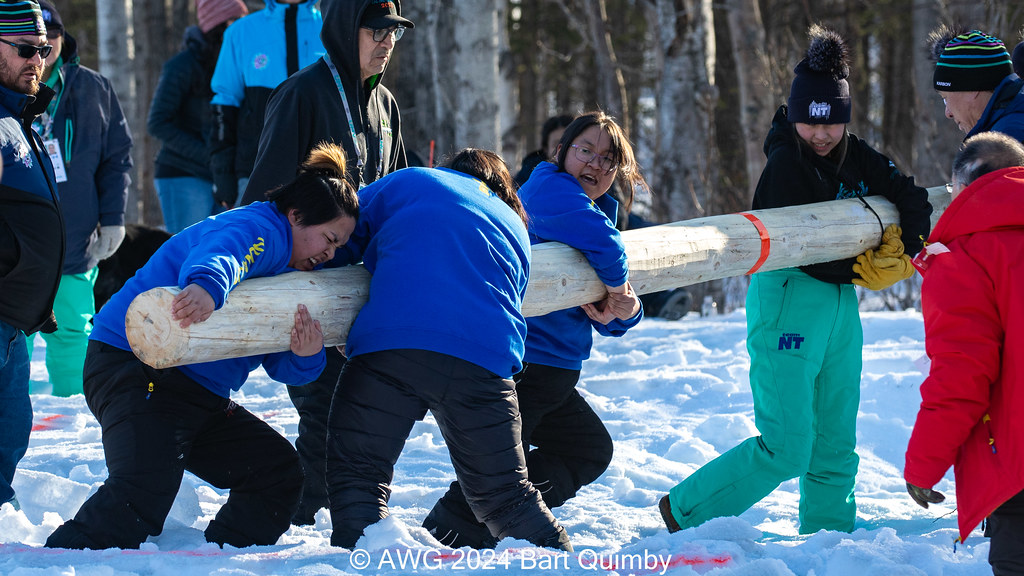
Pole push
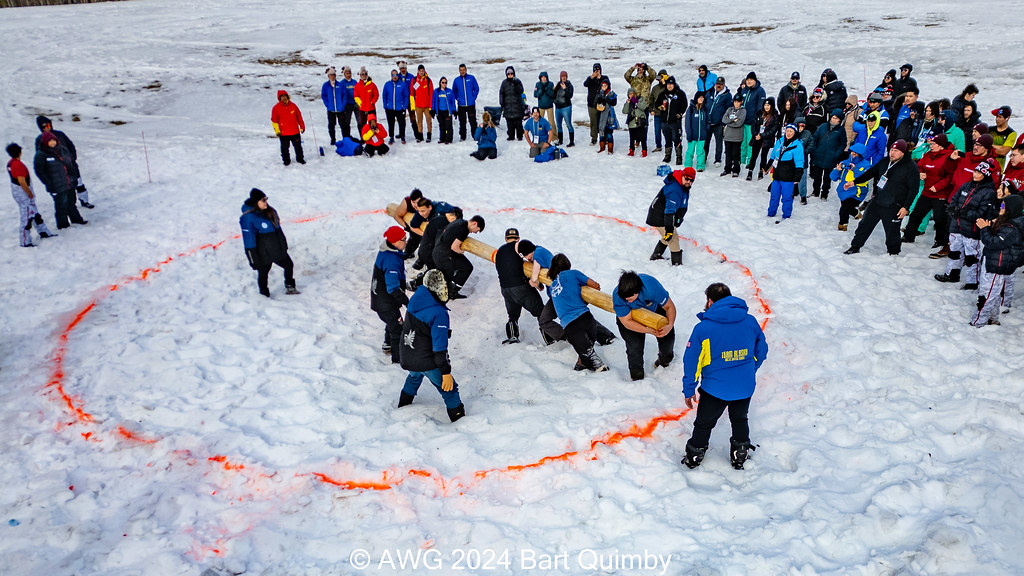
Pole push is a tug of war game , in that the participants in teams hold on to a pole and attempt to push the opposing team across a set mark. Each team of four (4) players grasps opposite ends of the pole, with the center mark of the pole positioned over the center point of the marked circle.
The Pole Push has its origins in general Arctic indigenous camp life, serving as a strength training and general entertainment. The Pole Push is known from the Dene, where it would act as strength training to prepare them for carrying wooden canoes over great distances.
Competing: Open Male, Open Female, U18 Male and U18 Female
Each competitor has three (3) attempts.
Resources
Northwestel
Northern Vision Development (NVD)
Gold Sponsors
Yukon Energy
Dakwakada Capital Investments (Northerm Windows, Castle Rock)
Mammoth Agency
Air North, Yukon’s Airline
Funding Partners
Legacy Partner
Gold Sponsors
Silver Sponsors
Bronze Sponsors
Games Suppliers
Games Supporters
Friends of the Games
Remarque :
La traduction française du site est générée automatiquement et peut ne pas être totalement exacte.
please note :
French translation on the site is auto generated and may not be fully accurate.
Should there be an issue with the translation, please email info@awg2026.org